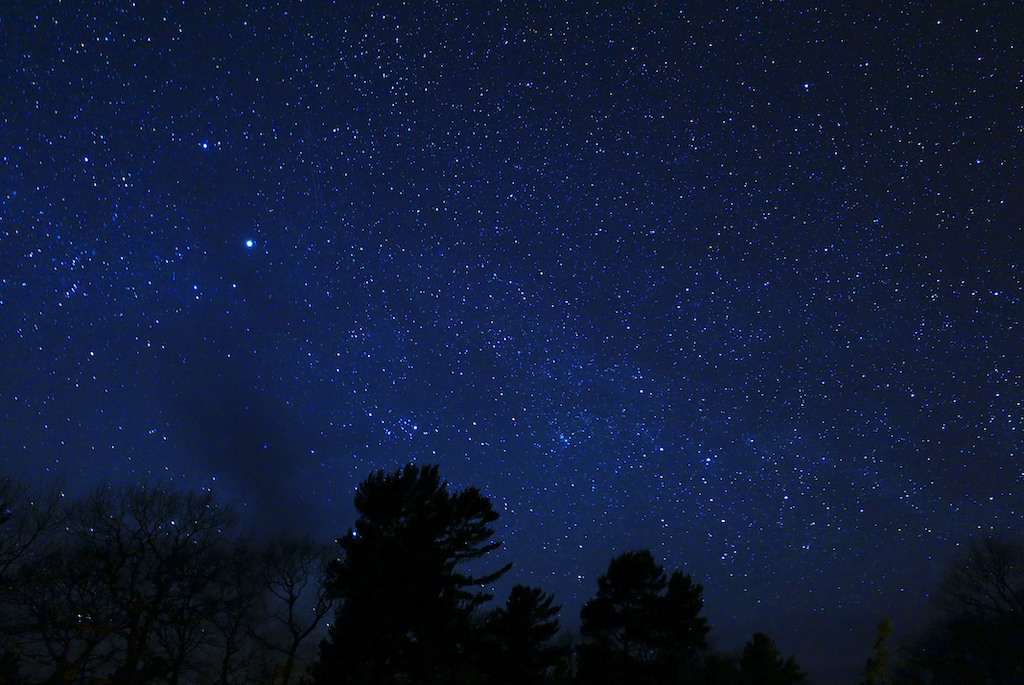

The moon is waxing toward September’s Full Corn Moon on September 26, so this week favors moonlit hikes and landscape photography over deep dark-sky viewing — the first-quarter moon on September 19 already put it up for most of the evening. True dark skies return as the moon wanes toward the New Moon on October 10.
Mark the calendar: the Keweenaw Mountain Lodge hosts a Northern Lights Photography Workshop on October 10 from 7:00 to 9:00 PM, right at the start of the next “Lights Out!” new-moon week, October 9–15 — the darkest, clearest skies of the month. Later on, the Orionid meteor shower peaks before dawn on October 23. It is one of two showers produced by debris from Halley’s Comet (with the Eta Aquariids in May) and typically delivers 10–20 meteors per hour under a dark sky; in 2026 a waxing gibbous moon is up for the first half of the night, so the best window is after moonset and before dawn.
Space-weather forecasters are also watching for a chance of a minor (G1) geomagnetic storm September 24–26. That is a real, if modest, chance to catch aurora activity on the northern horizon from the Keweenaw. It lands right at the Full Corn Moon, so only a strong, active display will show up against the bright sky — worth a glance north after dark on a clear night, without a guarantee.
- Full moon (Corn Moon): September 26 — bright, moonlit skies; better for a moonlit hike than stargazing
- Possible minor aurora: September 24–26 — a modest G1 storm chance, competing with the bright moon
- New moon & “Lights Out!” week: October 9–15, anchored by the New Moon on October 10 — the darkest skies of the month
- Northern Lights Photography Workshop: October 10, 7:00–9:00 PM at the Keweenaw Mountain Lodge
- Orionid meteor shower: peaks before dawn on October 23 — best viewed after moonset, in the hours before sunrise
- Full moon (Hunter’s Moon): October 26