The Closure Continues, But Mars’s Pass by Regulus and the Approaching Geminids Are Worth Watching For

The Keweenaw Dark Sky Park remains closed for its scheduled seasonal break, which runs through December 14. The moon is little reason to rush back in the meantime: it is waxing toward full this week, reaching the Beaver Moon on November 24, and it will wash out all but the brightest stars for several more nights.

Early risers with a clear eastern horizon have something to watch for while the park is closed. Mars continues its slow pass near Regulus, the bright heart of the constellation Leo, with a close approach around November 22, the first of three such meetings between the two that recur into 2027. The gathering builds through the month: on November 30, the Moon joins Mars, Jupiter, and Regulus low in the pre-dawn sky, visible to the naked eye roughly an hour before sunrise.

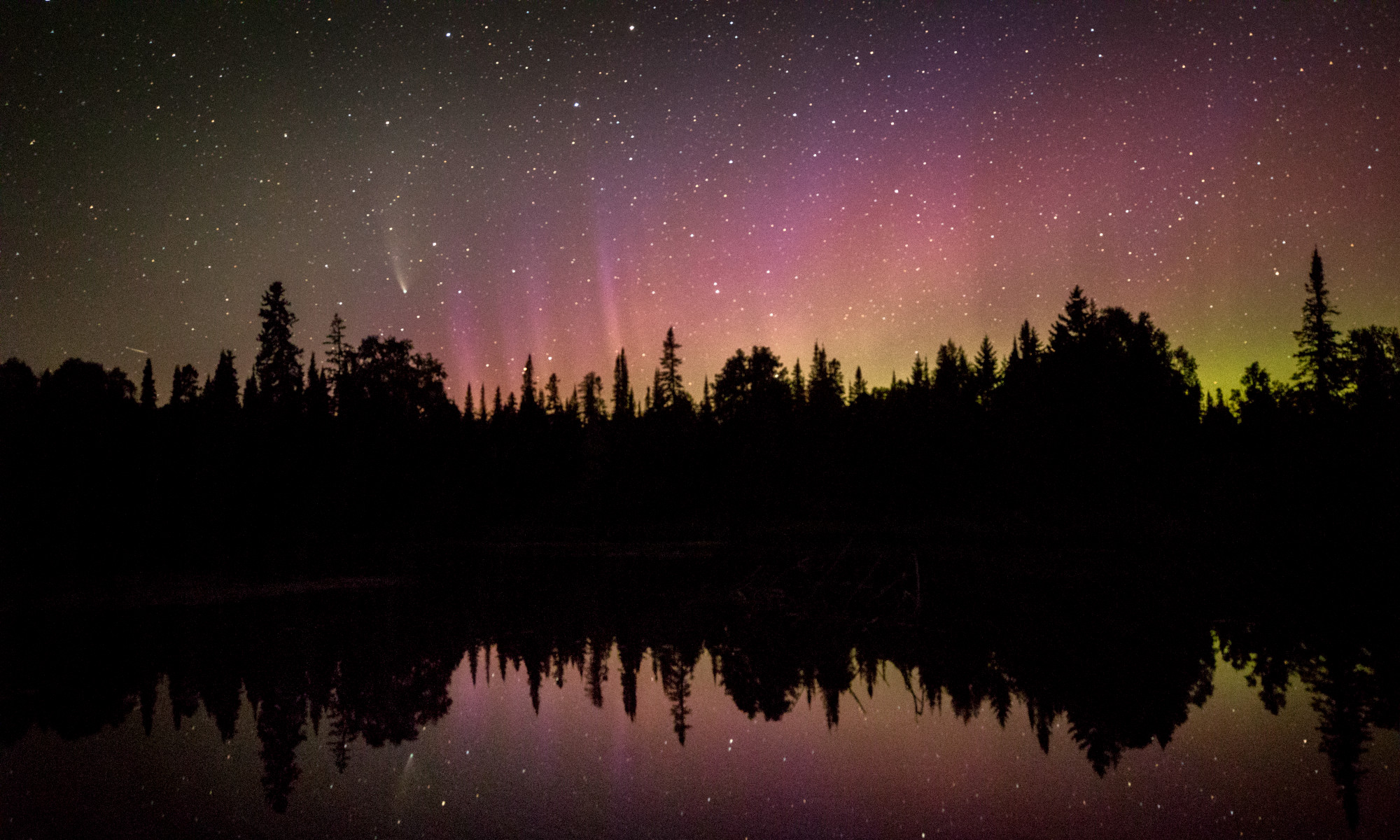
The sun remains active this autumn, and NOAA issued minor (G1) geomagnetic storm watches twice in the past two weeks. Additional storms remain possible through the rest of the closure. Anyone near a dark, north-facing vantage point, such as Brockway Mountain Drive, should check NOAA’s real-time forecast at spaceweather.gov before heading out after dark.

Mark the calendar for December 14. That is the day the Keweenaw Dark Sky Park reopens after staff vacation, and it falls within days of the Geminid meteor shower’s peak, one of the most reliable showers of the year. The sharpest rates come the night before, in the early hours of December 14, but good rates continue into reopening night itself. A new moon arrives December 8, so the stretch of nights leading into reopening are the darkest of the month. Those who want to see the shower from outside the park before the gates reopen can head to Brockway Mountain Drive or a nearby county or state park along Lake Superior. By reopening night, a young waxing crescent moon sets early in the evening, leaving the rest of the night dark for meteor-watching — a fitting welcome back for the Keweenaw Dark Sky Park.

Looking further ahead, the Quadrantid meteor shower, the first major shower of 2027, reaches its peak the night of January 3 into January 4, with a notably narrow, sharp peak that rewards being out at exactly the right hours.

Cabin guests of the Keweenaw Mountain Lodge may borrow a telescope once the park reopens, to make the most of the Geminids and the dark nights that follow.

The Park’s Final Dark Nights of the Season Arrive Before the November 16 Closure

The waxing crescent moon sets early again this week, leaving the hours after dusk dark through the weekend of November 13 through 15 — the final stretch of truly dark skies before the Keweenaw Dark Sky Park closes for its scheduled seasonal break, running from November 16 through December 14. Stargazers hoping to make one more trip to the golf course grounds at the Keweenaw Mountain Lodge should plan for these next few nights; the moon reaches its first quarter on November 17 and grows toward full by November 24, brightening the sky through the remainder of the closure.

Early risers have an additional reason to look up before dawn this week. Mars and Jupiter pass close together in the eastern morning sky, reaching conjunction around November 16, as part of a wider line-up of planets — Mercury, Venus, Mars, and Jupiter — stretching across the pre-dawn sky through the rest of the month. No equipment is required; the pairing is easily visible to the naked eye roughly an hour before sunrise.

Looking just beyond the closure, the Leonid meteor shower peaks overnight on November 17, with ten to fifteen meteors per hour expected under dark, moonless-enough skies. Because that peak falls the night after the park closes for the season, viewing from the golf course grounds will not be possible this year; stargazers in the area are welcome to watch instead from Brockway Mountain Drive or a nearby county or state park along Lake Superior.

Mark the calendar, too, for the Geminid meteor shower, one of the most reliable showers of the year, peaking the night of December 13 into December 14 — just as the park reopens for the season. A thin waxing crescent moon sets early that night, leaving dark skies for the shower’s peak and a fitting reopening night for the park.

The sun remains active this autumn, and additional geomagnetic storms remain possible in the weeks ahead. Check NOAA’s real-time aurora forecast at spaceweather.gov each evening for updates, and watch the northern horizon from a dark, open vantage point. Cabin guests of the Keweenaw Mountain Lodge may borrow a telescope to make the most of the park’s final nights before the seasonal closure.

A Geomagnetic Storm Opens a Big Weekend of Dark-Sky Programming

A minor geomagnetic storm is underway over the Keweenaw Peninsula tonight through the weekend of November 6–8, driven by a fast solar wind stream from a large coronal hole on the sun. NOAA has issued a G1 storm watch, with the planetary Kp index expected to reach 5 Friday evening before easing back toward 4 on Saturday night. Skies are moonless enough this week to make the most of it: the moon does not reach its new phase until November 9, and the darkest, clearest stretch of the month is expected to run roughly through November 13, the last extended dark window of the season before the park closes for its seasonal break.

Three programs line up with the storm and the dark window. A Northern Lights Photography Workshop, taught by photographer Nate Bett, is scheduled for November 7; reservations are required and may be made through the front desk at the Keweenaw Mountain Lodge. A Lights Out! observance runs November 6 through 12, during which outdoor lighting across the property is reduced to support darker skies for viewing. The same weekend, Houghton hosts Aurora Summit 2026, November 6 through 8, an independent gathering of aurora photographers and enthusiasts with sessions on photography, solar activity, and space weather; visitors already in the area may want to confirm registration status directly, as capacity may be limited.

Looking further ahead, the Leonid meteor shower peaks overnight on November 17, with roughly ten to fifteen meteors per hour expected under dark skies and a thin waxing crescent moon that sets early enough to leave most of the night dark. That peak falls the night after the park closes for the season on November 16, so viewing from the golf course grounds will not be possible; stargazers are welcome to watch instead from Brockway Mountain Drive or a nearby county or state park along Lake Superior. Mark the calendar, too, for the Geminid meteor shower on the night of December 13 into December 14 — one of the most reliable showers of the year — with a thin waxing crescent moon setting by around 9 p.m. and the peak falling just before the park reopens for the season on December 14.

The sun remains active this autumn, and additional storms remain possible in the weeks ahead. Check NOAA’s real-time aurora forecast at spaceweather.gov each evening, and watch the northern horizon from a dark, open vantage point. Cabin guests of the Keweenaw Mountain Lodge may borrow a telescope to make the most of the nights remaining before the seasonal closure.

New Moon Skies Return November 9, With the Leonids on the Horizon

The Hunter’s Moon reached full phase on October 26, and skies have stayed brighter than usual in the nights since as the moon wanes. That begins to change by the end of this week, as the moon thins toward its next new phase on November 9.

The darkest, clearest stretch of the month opens with that new moon and is expected to run roughly November 5 through November 13, the last extended dark window of the season before the Keweenaw Dark Sky Park closes for its seasonal break. The Keweenaw Mountain Lodge calendar lists two programs inside that window: a Northern Lights Photography Workshop on November 7, taught by photographer Nate Bett, and a Lights Out! observance running November 6 through 12, during which outdoor lighting across the property is reduced to support darker skies. Reservations for the workshop are required and may be made through the front desk at the Lodge.

The same weekend, Houghton hosts the Aurora Summit 2026, November 6 through 8, an independent gathering for aurora photographers and enthusiasts with sessions on photography, solar activity, and space weather. Visitors already in the area for the Lodge’s own dark-sky programming may want to check michiganaurorachasers.com for registration status, since capacity may be limited.

Looking a little further ahead, the Leonid meteor shower peaks overnight on November 17, debris left behind by Comet Tempel-Tuttle. It is not expected to be an especially strong year for the Leonids, with roughly ten to fifteen meteors per hour under dark skies, but viewing conditions are close to ideal: the moon is a thin waxing crescent that sets in the early evening, leaving the rest of the night dark. This peak falls after the Keweenaw Dark Sky Park closes for the season on November 16, so the golf course grounds will not be accessible that night. Stargazers are welcome to watch instead from Brockway Mountain Drive or one of the nearby county and state parks along Lake Superior.

Further out still, mark the calendar for the Geminid meteor shower, which peaks the night of December 13 into December 14 and is consistently one of the best showers of the year. The thin waxing crescent moon sets by around 9 p.m. that night, leaving the rest of the night dark for viewing. The peak falls just before the Keweenaw Dark Sky Park reopens for the season on December 14, making the days that follow a strong candidate for the first dark-sky outing of winter.

The sun remains active this autumn, and additional coronal mass ejections remain possible in the weeks ahead. It is worth checking NOAA’s real-time aurora forecast at spaceweather.gov each evening and watching the northern horizon from a dark, open vantage point.

Cabin guests of the Keweenaw Mountain Lodge may borrow a telescope to make the most of any of the nights remaining before then.

Note: The Keweenaw Dark Sky Park closes on November 16 and reopens December 14 for staff vacation.


The Hunter’s Moon Rises October 26, With the Leonids and One Final Dark Window Ahead

The Orionid meteor shower peaked overnight on October 21 into October 22, closing out one of the more reliable showers of the autumn. The moon is now waxing toward its full October phase, the Hunter’s Moon, which arrives October 26. Skies will stay brighter than usual for the next several nights as a result, so this is a good week to rest the telescope and watch the calendar instead.

The next dark window opens with the new moon on November 9, running roughly November 5 through November 13. This stretch is likely to be the best stargazing of the remaining season, before the park closes for its scheduled seasonal break.

The Keweenaw Mountain Lodge calendar lists two programs during that window: a Northern Lights Photography Workshop on November 7, taught by photographer Nate Bett, and a Lights Out! observance running November 6 through 12, encouraging reduced outdoor lighting across the property to support darker skies. Reservations for the workshop are required and may be made by calling the front desk at the Lodge.

Looking a little further ahead, the Leonid meteor shower peaks overnight on November 17, debris left behind by Comet Tempel-Tuttle. It is not expected to be an especially strong year for the Leonids, with roughly ten to fifteen meteors per hour under dark skies, but it remains worth watching for. This peak falls just after the Keweenaw Dark Sky Park closes for staff vacation on November 16 (opening back up on December 14th), so the golf course grounds will not be accessible that night. Stargazers are welcome to watch instead from Brockway Mountain Drive or one of the nearby county and state parks along Lake Superior.

The sun also remains active this autumn, and additional coronal mass ejections remain possible in the weeks ahead. It is worth checking NOAA’s real-time aurora forecast at spaceweather.gov each evening and watching the northern horizon from a dark, open vantage point.

The Keweenaw Dark Sky Park closes for the season on November 16 and reopens December 14. Cabin guests of the Keweenaw Mountain Lodge may borrow a telescope to make the most of any of the nights remaining before then.