Space Mirrors and Dark Skies: The Reflect Orbital Debate, Explained

A new kind of light pollution debate has reached the FCC, and it is worth knowing about here at Keweenaw Dark Sky Park.

A California startup called Reflect Orbital wants to launch a constellation of orbiting mirrors that redirect sunlight down to specific spots on Earth — what the company calls “sunlight on demand.” Its first demonstration satellite, Earendil-1, is an 18-by-18-meter reflector planned to orbit roughly 600–650 kilometers up, casting a beam about five kilometers wide with brightness comparable to a full moon. The long-term plan is far bigger: a constellation that grows from two satellites in 2026 to more than 50,000 by 2035, eventually able to deliver daylight-level brightness anywhere on the night side of the planet, on demand.

Reflect Orbital pitches this as a tool for extending solar power generation past sunset, aiding disaster response and search-and-rescue, lighting industrial or agricultural sites, and more. Dark sky and astronomy organizations see it very differently. In its organizational statement, DarkSky International lays out five categories of concern:

  1. disruption to nocturnal wildlife (navigation, migration, feeding, and reproduction across hundreds of species);
  2. harm to human health through disrupted circadian rhythms;
  3. public safety risks from malfunctioning mirrors, stray glare, or sweeping beams;
  4. interference with astronomical research; and
  5. added orbital debris risk in an already crowded stretch of low Earth orbit

Harvard astrophysicist Jonathan McDowell has called the project “an insane project,” arguing there is “a failure to understand that darkness is a good thing,” while biologist Brett Seymoure has described the prospect of permanent sky illumination as “an existential crisis” for nocturnal life.

To its credit, Reflect Orbital has not simply dismissed those concerns. In a recent post, the company outlines three design principles it says address them:

  1. controllability (steerable mirrors that light only a targeted area for brief windows, and go to a low-visibility attitude when idle),
  2. transparency (sharing satellite positions in advance so researchers can plan around them), and
  3. avoidability (excluding designated dark sky places, by GPS coordinate, from the service area).

The company has invited astronomers to serve as “technical partners” in evaluating the technology as it is tested.

Here is where the case stands. The FCC’s Space Bureau approved Earendil-1’s license on July 9, 2026, over formal objections from the American Astronomical Society and more than 1,800 public comments opposing it. On August 6, 2026, DarkSky International joined the American Bird Conservancy, Environment America, and Public Employees for Environmental Responsibility (represented by Earthjustice) in asking the full Commission to reverse that approval and require a full environmental review — or, failing that, to attach sixteen specific operating conditions to the license. No ruling timeline has been set. A separate legal question runs underneath all of this: satellites are currently treated as exempt from environmental review because the FCC classifies their effects as outside U.S. jurisdiction, a categorization critics argue was never meant to cover a device built specifically to redirect sunlight onto U.S. soil.

This is not simply industry versus environment; it is environment versus environment, and that tension is worth sitting with for a moment. The Keweenaw Mountain Lodge (the headquarters for the dark sky park) holds both sides of it. As a Certified B Corp and an Audubon International green lodging property, the Lodge’s environmental commitments run wider than the night sky alone — energy use, water, waste, habitat. Reflect Orbital’s core pitch sits squarely inside that same frame: extending solar generation past sunset means less reliance on fossil-fuel peaker plants, which is a real climate benefit. But headquartering an International Dark Sky Park means the Lodge has also staked out a specific, additional position — that darkness itself has value worth protecting on its own terms, not only as a variable to optimize around energy needs. Those two commitments do not automatically agree with each other here, and pretending otherwise would not be honest.

We do not have a stake in how the FCC rules, and we are not going to tell you what to think about it. What we can say is that this is exactly the kind of question a dark sky designation exists to raise: what is it worth to keep some places genuinely dark, and who gets to decide? Two demonstration satellites are a very different thing from fifty thousand. Worth watching, and worth reading the primary sources yourself.


  • What Reflect Orbital wants to do: launch orbital mirrors that redirect sunlight to targeted spots on Earth, scaling from 2 satellites in 2026 to a planned 50,000+ by 2035
  • What dark sky and astronomy groups are worried about: wildlife disruption, human health effects, public safety, interference with astronomical research, and orbital debris
  • What Reflect Orbital is offering in response: steerable, low-visibility-when-idle mirrors; advance notice of satellite positions; and exclusion of designated dark sky places from the service area
  • Where it stands: the FCC approved the first demo satellite in July 2026; DarkSky International and allied groups filed for a full-Commission reversal in August 2026; no ruling date has been set

Further reading, straight from the source:

Full Corn Moon This Week — Then New Moon Skies Return October 9–15

The moon is waxing toward September’s Full Corn Moon on September 26, so this week favors moonlit hikes and landscape photography over deep dark-sky viewing — the first-quarter moon on September 19 already put it up for most of the evening. True dark skies return as the moon wanes toward the New Moon on October 10.

Mark the calendar: the Keweenaw Mountain Lodge hosts a Northern Lights Photography Workshop on October 10 from 7:00 to 9:00 PM, right at the start of the next “Lights Out!” new-moon week, October 9–15 — the darkest, clearest skies of the month. Later on, the Orionid meteor shower peaks before dawn on October 23. It is one of two showers produced by debris from Halley’s Comet (with the Eta Aquariids in May) and typically delivers 10–20 meteors per hour under a dark sky; in 2026 a waxing gibbous moon is up for the first half of the night, so the best window is after moonset and before dawn.

Space-weather forecasters are also watching for a chance of a minor (G1) geomagnetic storm September 24–26. That is a real, if modest, chance to catch aurora activity on the northern horizon from the Keweenaw. It lands right at the Full Corn Moon, so only a strong, active display will show up against the bright sky — worth a glance north after dark on a clear night, without a guarantee.


  • Full moon (Corn Moon): September 26 — bright, moonlit skies; better for a moonlit hike than stargazing
  • Possible minor aurora: September 24–26 — a modest G1 storm chance, competing with the bright moon
  • New moon & “Lights Out!” week: October 9–15, anchored by the New Moon on October 10 — the darkest skies of the month
  • Northern Lights Photography Workshop: October 10, 7:00–9:00 PM at the Keweenaw Mountain Lodge
  • Orionid meteor shower: peaks before dawn on October 23 — best viewed after moonset, in the hours before sunrise
  • Full moon (Hunter’s Moon): October 26

New Moon Skies Are Here: September 6–14 Is Prime Stargazing Week

The new moon arrives in the early hours of September 11. During this time the Keweenaw Mountain Lodge will have “Lights Out!” — running September 6 through 12. With little to no moonlight washing out the sky, this is one of the best weeks of the month to visit after dark. Pair your visit with the Northern Lights Photography Workshop on September 11 from 7:30 to 9:30 PM to learn how to capture the Milky Way, and possibly the aurora, on camera.

Solar activity has been elevated this season. A geomagnetic storm watch on August 27–29 sent the northern lights as far south as Wisconsin and New York, with some of the clearest displays reported across the Upper Peninsula. Check the NOAA aurora forecast the night of your visit, then head out to Brockway Mountain, the shoreline of Lake Superior, or the Lodge grounds for a dark to view to the north.


  • New moon: night of September 10–11 — the darkest sky of the month; best window for Milky Way and deep-sky viewing runs roughly September 7–14
  • International Observe the Moon Night: Saturday, September 19 (NASA’s global observing event) — falls right alongside the first-quarter moon (Sept 19–20), which is a good phase for viewing lunar craters and mountains through a telescope before it sets.
  • Full moon (Corn Moon): September 26 — the weakest week of the month for deep-sky viewing, but a good week for moonlit-landscape photography instead.

Full Speaker Lineup and Schedule Announced for the Fourth Annual Upper Peninsula Dark Sky Festival

Following the initial announcement on January 30, 2026, the Keweenaw Mountain Lodge is pleased to release the full speaker lineup and updated schedule for the 2026 Upper Peninsula Dark Sky Festival — a three-day/night gathering honoring the beauty of natural darkness, the science of the night sky, and the deep connection between people and place, held in concert with International Dark Sky Week.

Eleven speakers have now been confirmed, representing fields spanning astrophysics, aurora chasing, night sky photography, dark sky conservation, archaeoastronomy, geomagnetic science, economic advocacy for darker skies, deep space imaging, and star-inspired art. The complete talk titles are now set.

“We are thrilled to share the full picture of what this year’s festival will be,” said John Mueller, owner of the Keweenaw Mountain Lodge. “From scientists to Indigenous photographers to artists, this lineup reflects everything that makes dark sky culture so rich and worth fostering. The festival exists to help people slow down, look up, and reconnect with nature — and this year’s speakers embody exactly that spirit.”

Tickets are $250 per person + tax, with attendance capped at 50 participants to preserve the intimate, intentional character of the event. The last day to purchase tickets is April 12, 2026. The festival has sold out every year since its 2023 inaugural edition. Early registration is strongly encouraged.

Festival Schedule

The 2026 festival runs across three days and nights. Thursday evening allows guests to arrive, settle in, and take in the opening presentation before heading out to stargaze. Friday and Saturday each feature a morning activity, midday lunch, afternoon talks, and an evening presentation — with open stargazing each night under some of the darkest skies in the Midwest.

Thursday, April 16th

  • 6:00 PM — Welcome / Opening Remarks — John Mueller (KML / Keweenaw Dark Sky Park) and Amber Harrison (DarkSky International, virtually)
  • 8:00 PM — Stargazing: Dark Sky Photography and Etiquette Workshop — Nate Bett
  • Evening — Open Stargazing

Friday, April 17th

  • 10:00 AM — A Dark Sky Watercolor Workshop — Lindsey Naylor (limited to 20 people — call 906-289-4403 ext. 4 to sign up)
  • 12:00 PM — Rustic and Worldly Lunch (included with ticket)
  • 1:00 PM — Postcards from the Universe: 2025–2026 via NASA’s Astronomy Picture of the Day — Robert Nemiroff
  • 3:30 PM — Stonehenge: History and Mystery — Dave Falkner
  • 6:00 PM — Dinner on your own
  • 8:00 PM — Travis Novitsky
  • Evening — Open Stargazing

Saturday, April 18th

  • 8:30 AM — Bus departs Lodge for Open Skies Tour (limited to 24 people — call 906-289-4403 ext. 4 to sign up) — sponsored by Visit Keweenaw
  • 12:00 PM — Rustic and Worldly Lunch (included with ticket)
  • 1:00 PM — Geomagnetic Storm Effects — “Astro” Bob King
  • 3:00 PM — In Pursuit of the Northern Lights: Painted Nights in the Darkest Parts of the World — Melissa Kaelin
  • 4:30 PM — Leveraging Economic Incentives for Darker Skies — Jamie Westfall
  • 6:00 PM — Dinner on your own
  • 8:00 PM — Deep Sky Astrophotography under Dark Skies — Ogetay Kayali
  • Evening — Open Stargazing

The 2026 Speakers

Below is the confirmed lineup of speakers and presenters for the 2026 festival, listed alphabetically by last name.

Nate Bett — Photographer and Educator

Presentation: Dark Sky Photography Workshop

Originally from Marquette and recently relocated to Hancock from New York City, Bett taught at the City University of New York and served as a technical specialist in photography for a major camera manufacturer. His Thursday evening workshop covers night sky photography fundamentals, image editing in Adobe Lightroom Classic and Photoshop, stacking software such as Starry Landscape Stacker, and gear selection — giving attendees the tools to capture the night sky shots they’ve always wanted.

Dave Falkner — NASA Solar System Ambassador

Presentation: Stonehenge: History and Mystery

A retired Naval officer and lifelong amateur astronomer, Falkner has authored two published books (one in a second edition) and has taught Introduction to Astronomy at the college level. He has served on the board of the Minnesota Astronomical Society and is a member of the Astronomy in Chile Education Ambassador Program (ACEAP) and a NASA Solar System Ambassador. He resides in Blaine, Minnesota.

Amber Harrison — Dark Sky Places Program Manager, DarkSky International (joining virtually)

Presentation: Opening Remarks and Status of the Dark Sky Places Program

Harrison is responsible for the global Dark Sky Places Program at DarkSky International. A former park ranger and interpreter at Big Bend Ranch State Park — the largest, most remote, and darkest park in Texas — she led successful Dark Sky Places applications for public lands in the Big Bend region and holds graduate degrees in Anthropology from Wichita State University.

Melissa Kaelin — Author and Founder, Michigan Aurora Chasers

Presentation: In Pursuit of the Northern Lights: Painted Nights in the Darkest Parts of the World

Author of Beyond the 45th Parallel: The Beginner’s Guide to Chasing Aurora, Kaelin has led thousands to their first Northern Lights experience through guided chases, online tutorials, and public talks. She founded the Michigan Aurora Chasers, co-founded the Aurora Summit, co-hosted the inaugural GLAD Jam in Houghton, volunteered for NASA’s SolarMax Mission, and leads international aurora tours for the University of Michigan Alumni Association. Her talk takes attendees on a journey to Alaska, Iceland, Norway, Finland, Canada’s Northwest Territories, and the Arctic Circle.

Ogetay Kayali — Deep Space Photographer and PhD Candidate in Astrophysics, Michigan Technological University

Presentation: Deep Sky Astrophotography under Dark Skies

Kayali works for NASA’s Astronomy Picture of the Day and has spent over a decade in public outreach and science communication. His presentation covers how remote dark sky sites accelerate astrophotography, from beginner-friendly deep sky imaging with telescopes and cameras to advanced techniques — illustrated with his own award-winning work. He founded a popular science platform in Turkey that became one of its most visited science sites, authored over 300 popular science articles, and contributed to a YouTube channel surpassing 50 million views. His astrophotography has earned an Astrobin Image of the Day, 6 Top Picks, and 8 Top Pick Nominations, and appeared on the cover of ScopeTrader magazine in November 2024.

“Astro” Bob King — Author and Educator

Presentation: Geomagnetic Storm Effects

Bob King has shared his lifelong love of the night sky through teaching and public observing for decades. A long-time member of the American Association of Variable Star Observers (AAVSO), he writes regularly for Sky & Telescope and has maintained the popular Astro Bob blog since 2008. He also broadcasts current sky events on WTIP-FM (Grand Marais) and The North 103.3 FM (Duluth).

John Mueller — Owner, Keweenaw Mountain Lodge / Keweenaw Dark Sky Park

Presentation: Welcome Remarks and the Keweenaw Dark Sky Park

Mueller is the founder of Keweenaw Resort, LLC and the driving force behind the Lodge’s successful application for International Dark Sky Park designation, awarded by DarkSky International in 2022. He previously served as a professor of entrepreneurship and innovation at St. Edward’s University, Fresno State, and Western Michigan University. His opening remarks will cover the progress of the Keweenaw Dark Sky Park and include a Q&A on DarkSky International’s places program.

Lindsey Naylor — Artist and Graphic Designer

Presentation: A Dark Sky Watercolor Workshop (limited to 20 participants — call 906-289-4403 ext. 4 to sign up)

Naylor is an independent artist whose hand-drawn style spans murals, branding, packaging, and illustration, with professional design work since 2011. She is the artist behind the Lodge’s acclaimed WPA-era four-season poster series. Her Friday morning workshop guides participants through creating a galaxy-inspired watercolor painting — covering basic technique, the Milky Way, and the Northern Lights. All materials are provided; no prior experience is necessary.

Robert Nemiroff — Co-creator of NASA’s Astronomy Picture of the Day (APOD) and Professor of Physics, Michigan Technological University

Presentation: Postcards from the Universe: 2025–2026 via NASA’s Astronomy Picture of the Day

A Fellow of the American Physical Society with a PhD from the University of Pennsylvania, Nemiroff is best known as a creator, writer, and editor of NASA’s Astronomy Picture of the Day (apod.nasa.gov) — one of NASA’s most popular science websites. His 2026 talk showcases standout images and videos from APOD spanning 2025–2026, including Hubble and Webb telescope imagery, nebulae, aurorae, galaxies, and the Solar System. His new book, Faster than Light, How Your Shadow Can Do It but You Can’t, is available from Amazon.

Travis Novitsky — Artist and Photographer, Grand Portage Anishinaabe Nation, MN

Presentation: Topic to be announced

A proud lifelong member of the Grand Portage Anishinaabe Nation in northeast Minnesota, Novitsky has spent over 35 years photographing the woods and waters of the Lake Superior north shore. His favorite subject is the night sky and the Aurora Borealis. He served as Co-Producer and Narrator of the documentary Northern Nights, Starry Skies and is the photographer for Spirits Dancing – The Night Sky, Indigenous Knowledge & Cultural Connections to the Cosmos (text by Annette S. Lee).

Jamie Westfall — Park Manager, Headlands International Dark Sky Park, Mackinaw City, MI

Presentation: Leveraging Economic Incentives for Darker Skies

Westfall manages Headlands International Dark Sky Park and two other Emmet County parks. A Dark Sky Advocate with DarkSky International and a Certified Parks and Recreation Professional, she will share strategies that dark sky advocates can use to collaborate with business leaders to encourage more environmentally considerate lighting solutions. She has been central to the dark sky protection movement within the parks and recreation industry in Michigan.

Rustic and Worldly Lunches

Each ticket includes two gourmet lunches on Friday and Saturday, prepared by the Lodge’s culinary team. Guests should indicate their dietary preference — meat or vegetarian — at the time of purchase. Menus are subject to change based on ingredient availability; no substitutions.

Friday Lunch

  • Chicken fajitas with veggies and creamy chipotle sauce, sautéed corn and onion, Spanish rice, and a cookie. (Mexican-influenced)
  • Roasted eggplant dressed in lemon and olive oil with sautéed vegetables on a wrap, served with garlic-lemon-cilantro potato and a cookie. (Lebanese-influenced)

Saturday Lunch

  • Beef Kafta Wrap with lettuce, tomato, pickled red onion, and hummus, served with a side salad and a cookie. (Lebanese-influenced)
  • Asian Buddha Bowl (rice, broccoli, carrots, bell peppers, cucumber, tofu) with peanut butter dressing, served with a vegetarian samosa and a cookie. (Indian-influenced)

Evening dinners during the festival are available at the Lodge’s Little Cabin Cafe — paid separately from tickets and reserved in advance. Additional dining options in the area include Eagle Harbor Inn (Eagle Harbor), Fitzgerald’s (Eagle River), Glacia Tavern (Mohawk), and Mariner North (Copper Harbor).

Tickets & Participation

Festival tickets are $250 per person + tax, including access to all presentations, workshops, and the Rustic and Worldly Lunches on Friday and Saturday. With attendance limited to 50 participants, the experience remains intimate and intentional. The last day to purchase tickets is April 12, 2026. The festival has sold out every year since its inaugural edition in 2023.

Please indicate your lunch preference (meat or vegetarian) at time of purchase. For more information and to register, visit the Keweenaw Mountain Lodge website.


[ Print Version (PDF): PR 20260311 – Full Speaker Lineup and Schedule announced for the Fourth Annual Upper Peninsula Dark Sky Festival ]
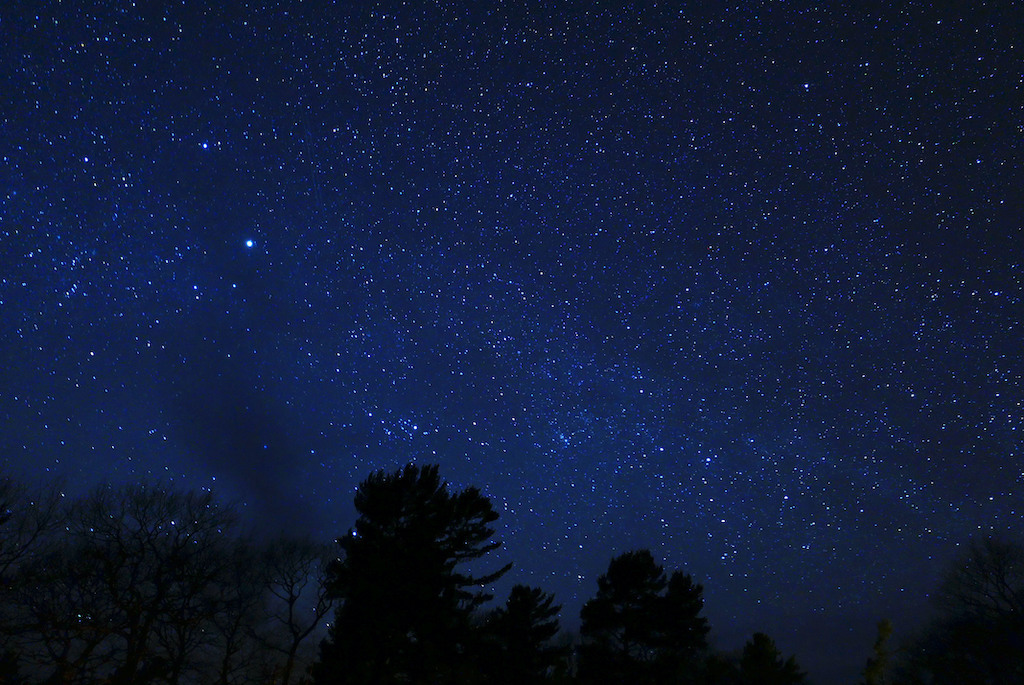
The Fourth-annual Upper Peninsula Dark Sky Festival, hosted at the Keweenaw Mountain Lodge

The Keweenaw Mountain Lodge, a historic four-season wilderness resort dedicated to helping people disconnect from everyday life and get closer to nature, invites like-minded adventurers, stewards, and dark sky lovers to the 2026 Upper Peninsula Dark Sky Festival from April 16–18, 2026. This three-day/night gathering honors the beauty of natural darkness, the science of the night sky, and the deep connection between people and place — held in concert with International Dark Sky Week.


At its heart, the Lodge exists to provide “a fun, joyous, and adventuresome wilderness experience so guests can disengage from their everyday lives and be closer to nature,” improving wellness and sparking wonder. The Dark Sky Festival reflects those same motivations — bringing people together to learn, explore, and deepen their appreciation for dark skies as a vital part of the natural world.

A Gathering Rooted in Shared Values

The Upper Peninsula Dark Sky Festival is designed for individuals who care about:

  • Experiential connection to nature — escaping the artificial glare of urban life to experience true darkness and celestial splendor.
  • Environmental stewardship and conservation, recognizing that fostering dark skies supports ecosystems and human well-being.
  • Education and lifelong learning, with engaging workshops that illuminate both science and responsible practice.
  • Community and shared experience, fostering connection among fellow stewards of the night sky.
  • Joy, curiosity, and mindful presence, values embedded in the Lodge’s culture of being “fun, joyous, and adventuresome.”

The Lodge team’s approach — grounded in valuing team members, guests, the community, and the environment — ensures that every moment resonates with purpose and presence.

Festival Highlights

Participants will enjoy a curated blend of daytime and nighttime activities that invite both learning and reflection:

  • Expert Talks on astrophysics, light pollution, and responsible lighting practices
  • Workshops in night sky photography, dark sky etiquette, and star-inspired art
  • Stargazing Sessions under some of the darkest skies in the Midwest
  • Community Meals and Social Exploration, encouraging reflection and shared stories

Whether you are a dedicated astrophotographer or someone experiencing dark skies for the first time, the festival creates space for curiosity, connection, and the joy of discovery.

A Place that Lives its Mission

As a Certified B Corp™ and an Audubon International Green Lodging establishment, the Keweenaw Mountain Lodge practices sustainability, education, and environmental respect in all aspects of operation. The Lodge’s role as headquarters of the Keweenaw Dark Sky Park — a designation supported by DarkSky International — further underscores its commitment to preserving dark skies for future generations.

Set amid ancient forests and wide horizons, the Festival embodies the Lodge’s core purpose: to create experiences that help people slow down, reconnect with nature, and return home with a renewed sense of awe.

Tickets & Participation

Festival tickets are $250 per person + tax, including access to all presentations, workshops, and rustic lunches on Friday and Saturday. With attendance limited to 50 participants, the experience remains intimate and intentional.

For more information and to register, visit the Keweenaw Mountain Lodge website.


LINKS:


[ Print Version (PDF): PR 20260130 – KML hosts the 2026 UP Dark Sky Festival ]