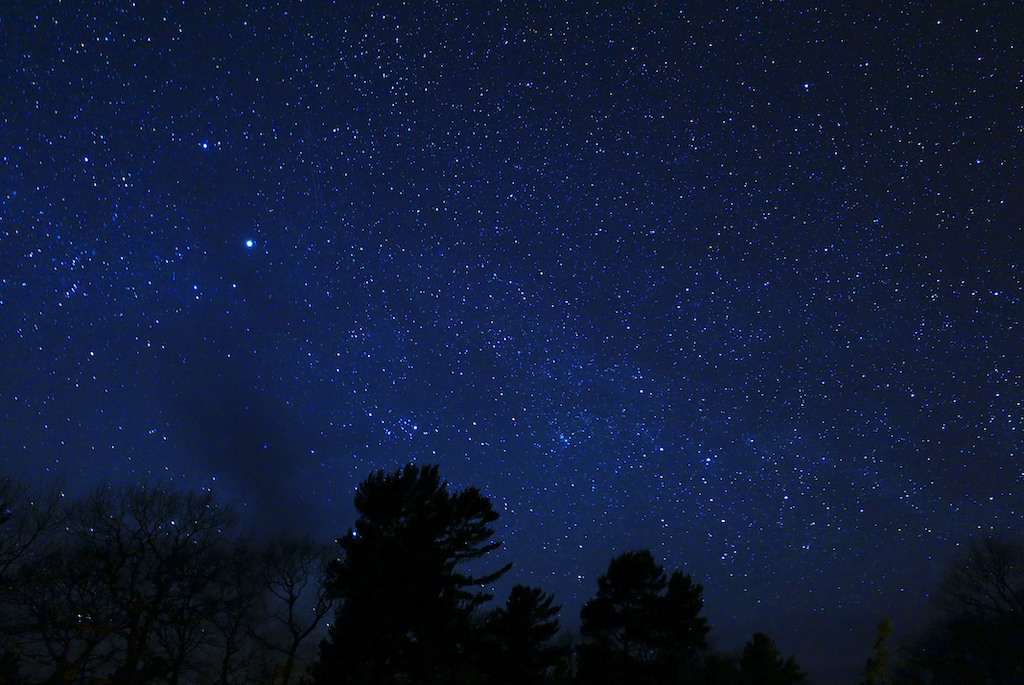
The moon continues to wax toward its October full phase, the Hunter’s Moon, which arrives October 26. Skies are brighter than they were during the new moon window earlier this month, but the next week still holds one of the best reasons to look up this fall (as long as the skies stay clear). The Orionid meteor shower, debris from Halley’s Comet, peaks the night of October 21 into the morning of October 22, typically producing fifteen to twenty-five meteors per hour under a dark sky, among the more reliable showers of the year. A waxing gibbous moon, roughly eighty percent lit, will wash out the early evening hours this year, so the better viewing time will be in the hour or two before dawn, once the moon has set and the sky darkens again. A stargazing walk on the golf course at the dark sky park, or a drive up Brockway Mountain in the hours before sunrise, is a way to catch the peak.
The sun also remains active this autumn, and additional coronal mass ejections remain possible in the weeks ahead, so it is worth checking NOAA’s real-time aurora forecast at spaceweather.gov each evening and watching the northern horizon from a dark, open vantage point.
Looking further ahead, the moon reaches new phase again on November 9, opening one more extended dark stretch before winter, running roughly November 5 through 13 — likely the best week of stargazing remaining this season. The Keweenaw Mountain Lodge calendar also lists a Northern Lights Photography Workshop on November 7, taught by photographer Nate Bett, plus a Lights Out! observance running November 6 through 12. Reservations for the workshop are required and may be made through the Outdoor Activity Center.
The park closes for the season on November 15 and reopens in mid-December, so this stretch of autumn is one of the last chances of the year for an extended dark-sky visit. Guests of the Keweenaw Mountain Lodge may borrow a telescope from the Outdoor Activity Center to make the most of any of these nights.